
Key Takeaways
An Innovation Screen reduces bias in innovation portfolio decisions by comparing every project on the same two dimensions, potential impact and probability of success. Rather than debating projects one at a time, it reveals the portfolio’s mix across four project types—Bread and Butter, White Elephants, Oysters, and Pearls—making executive judgment visible, comparable, and easier to challenge.
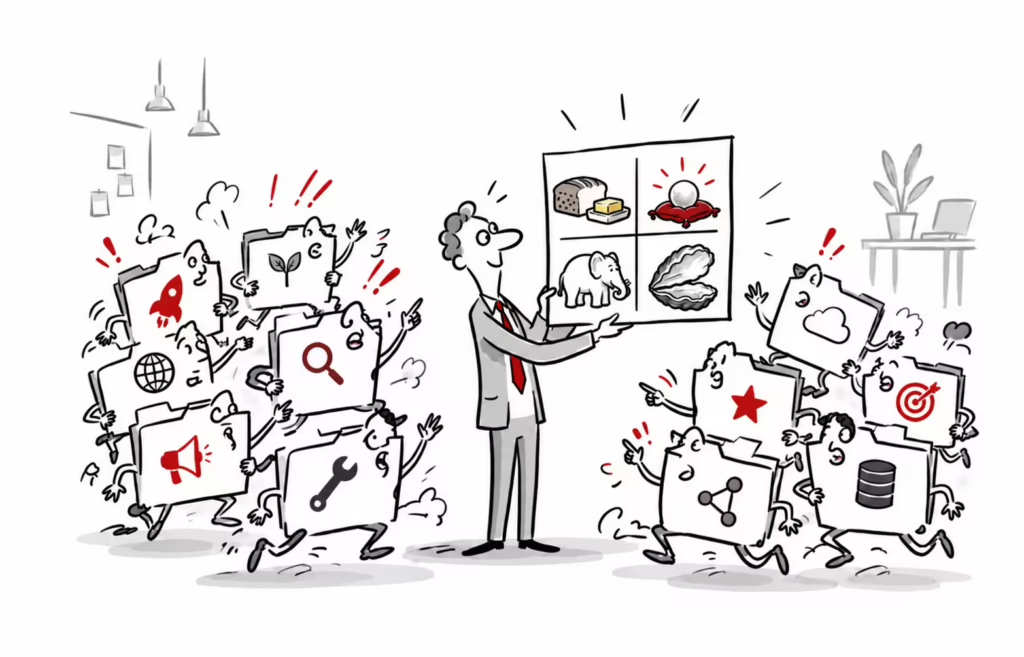
A common frame turns competing project stories into comparable portfolio choices.
Why Portfolio Decisions Are So Vulnerable to Bias
Innovation executives rarely lack ideas. The harder problem is deciding which ideas deserve continued attention, learning resources, and investment.
These decisions are particularly vulnerable to bias, because innovation projects arrive with:
- Different levels of maturity
- Incomplete and uneven evidence
- Optimistic financial projections
- Strong internal advocates
- Different definitions of risk, value, and strategic importance
Project-by-project reviews make the problem worse. Each team presents its opportunity in the most favorable light, often using its own assumptions and scoring logic. Executives may approve several individually reasonable projects without recognizing that the combined portfolio is unlikely to produce meaningful growth.
A strong Decision Quality framework improves how individual decisions are framed and evaluated. The Innovation Screen provides a complementary portfolio-level view: Are we investing in the right mix of opportunities?
What Is an Innovation Screen?
The Innovation Screen maps each project according to:
- Potential Impact: How large could the contribution be if the project succeeds?
- Probability of Success: How likely is the project to achieve that outcome?
Potential Impact reflects the unconstrained target value (or upside return) if the project succeeds, ensuring probability is evaluated on its own axis rather than double-counted in financial valuation.
The Innovation Screen depends on comparable business cases. Each project’s position should reflect its base-case value, plausible upside, likelihood of success, key assumptions, and supporting evidence.
To create four project types, each axis has a threshold. For Probability of Success, “Easy” projects have a greater than 50% chance of success, while “Hard” projects have less than 50% chance of success. For Potential Impact, “Big” projects have meaningful impact on the financial outcomes for the business; “Small” projects, while potentially valuable, don’t individually have a meaningful impact.
Usually, people set their aspirations too low, so “Big” often isn’t big enough. Here are some guidelines. First, if this project succeeds, would its impact be worth the CEO’s individual and specific attention (or GM, or whoever has bottom-line oversight)? That’s “Big.” If it would appear on a report of many other contributions, that is “Small.” Second, a rule of thumb is the 5% rule. Would the impact of the project, if successful, change the trajectory of the company by more than 5% (in revenue or profit)? If so, the CEO is interested, and it is “Big.” If not, it would appear in the consolidated report and is “Small.”
With these categories, the Innovation Screen divides the portfolio into four project types:
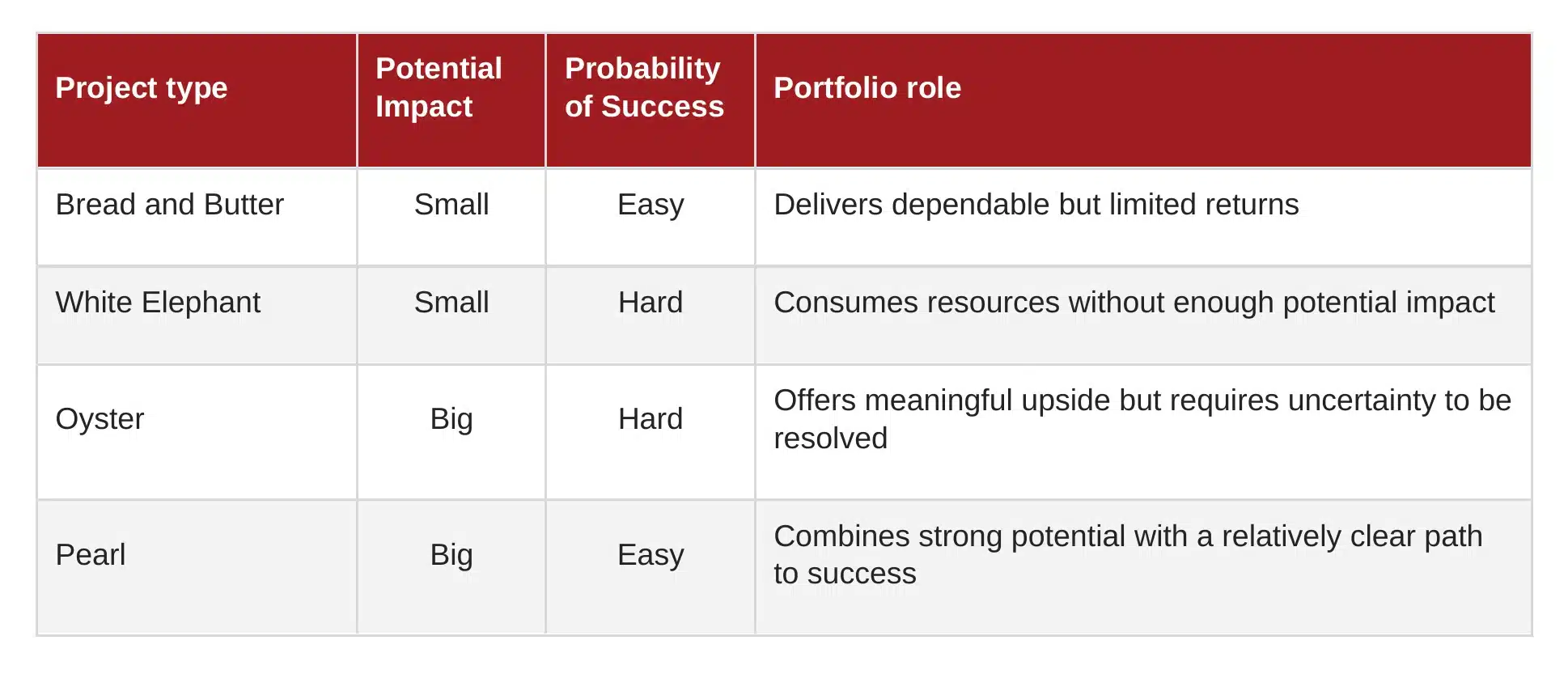
The names make the pattern easy to discuss, but the quadrants are not automatic investment decisions. They are prompts for a better executive conversation.
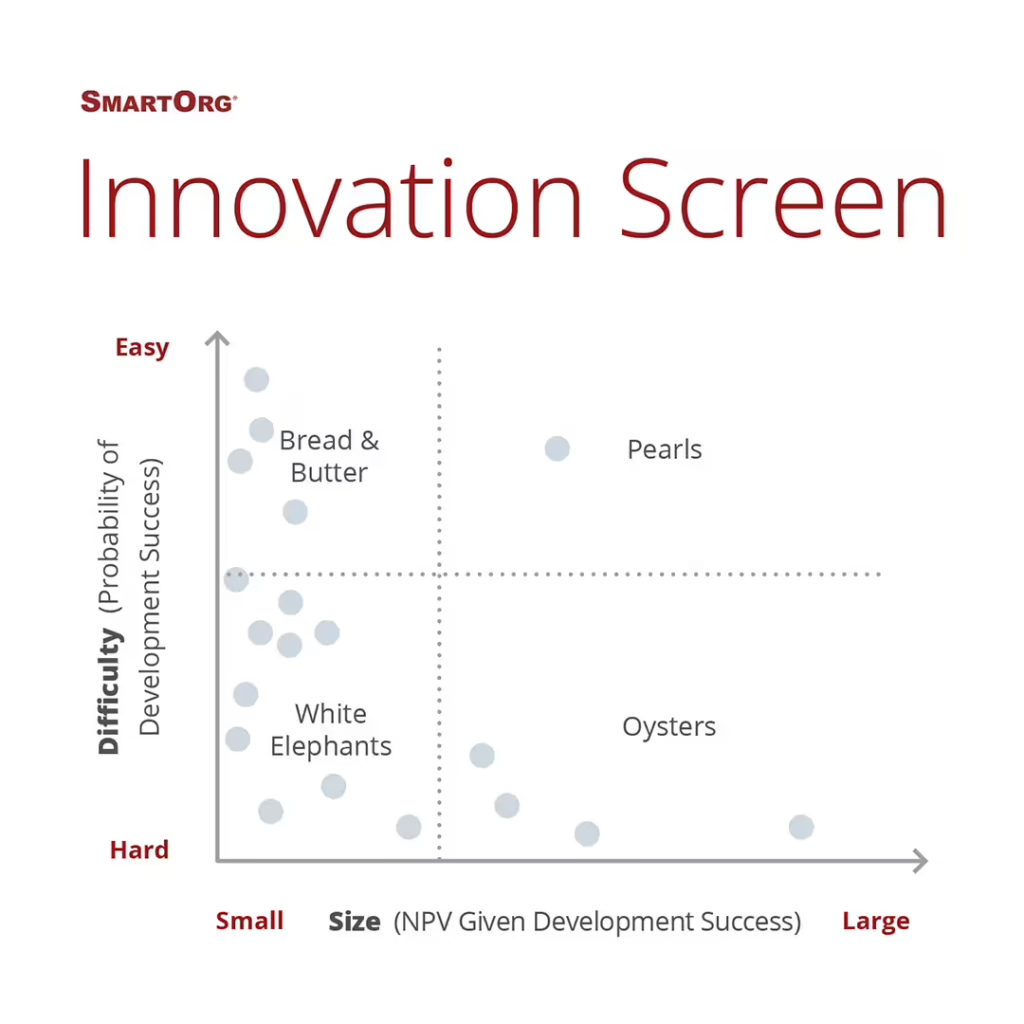
Portfolio Navigator’s Innovation Screen plots projects by potential value and probability of success, revealing the portfolio mix across Bread and Butter, Pearls, White Elephants, and Oysters.
Bias: Evaluating Every Project in Isolation
The problem
When executives review projects individually, they may approve too many modest opportunities because each one appears defensible on its own.
This creates portfolio clutter: numerous Bread and Butter projects compete for funding and management attention while contributing too little to the organization’s growth goals. SmartOrg has seen many times that a portfolio containing many individually low-risk projects often underperforms, because its overall mix lacks sufficient growth potential.
How the Innovation Screen helps
Plotting the complete portfolio exposes concentration. Leaders can immediately see whether resources are disproportionately committed to small, incremental projects.
The question changes from “Is this a good project?” to “Does this project improve the portfolio we need?”
That distinction matters. A worthwhile project can still be the wrong addition to an already crowded portfolio.
Bias: Escalation of Commitment to White Elephants
The problem
Once an organization has invested significant money, time, or executive credibility in a project, abandoning it becomes difficult. Teams emphasize what has already been accomplished, while leaders hope that one more funding cycle will recover the investment.
A project may continue not because its future prospects are attractive, but because its past investment is emotionally difficult to surrender. Often the project was once a good idea, but external circumstances changed, rendering the project less valuable or more difficult.
How the Innovation Screen helps
White Elephants become visible as projects with relatively low potential impact and a low probability of success. The screen encourages leaders to ask:
- What evidence would justify continued investment?
- Can the project be reframed to increase its potential impact?
- Can a critical obstacle be removed to improve its probability of success?
- What higher-value work is being delayed because this project continues?
White Elephants are generally candidates for elimination unless leaders can identify a credible, evidence-based path to materially increase their impact or probability of success.
Bias: Preference for Safe, Familiar Work
The problem
Organizations often favor initiatives that resemble work they already know how to execute. These projects are easier to explain, estimate, and defend.
This familiarity bias can fill the portfolio with Bread and Butter projects. They may deliver reliable returns, but too many of them can leave a gap between the portfolio’s expected performance and the company’s growth ambitions.
How the Innovation Screen helps
The screen reveals whether safe work has quietly become the default investment strategy.
Bread and Butter projects have a legitimate role. They may support the core business, improve efficiency, or provide predictable near-term results. The issue is balance. Leaders must decide how much capacity these projects should receive relative to more consequential opportunities.
Action rule: Establish an explicit budget cap (e.g., maximum 30–40% of overall spend) for Bread & Butter initiatives, or prune the lowest-performing 20% annually to free up capacity for high-potential Oysters.
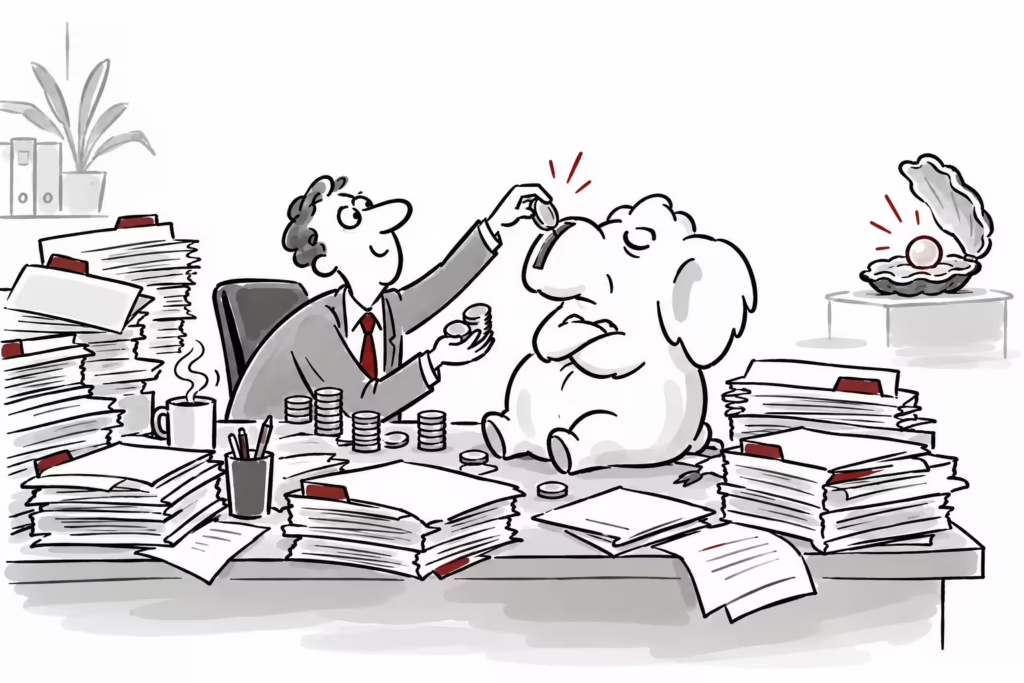
Portfolio clutter and past investment can keep White Elephants funded while stronger opportunities wait.
Bias: Rejecting Oysters Because They Look Too Risky
The problem
High-impact innovation often begins with substantial uncertainty. If executives treat uncertainty as a reason for rejection, promising Oysters may lose funding before teams can determine whether their most important assumptions are true.
Conversely, enthusiasm for a large opportunity can cause leaders to fund the entire undertaking before the evidence supports that commitment.
How the Innovation Screen helps
An Oyster is not necessarily a project to fund fully. It is a candidate for focused learning.
The next investment should address the uncertainty that most affects the opportunity’s value or probability of success. Supporting tools such as tornado diagrams, probabilistic forecasting, and learning plans can identify those critical uncertainties and design the evidence needed for the next decision.
This is where the Innovation Screen and Decision Quality work together:
- The Innovation Screen identifies the project’s role in the portfolio.
- Tornado analysis shows which uncertain factors matter most.
- A learning plan defines how the team will gather evidence.
- Stepwise commitment limits investment until the evidence supports proceeding.
The goal is to help an Oyster become a Pearl or reveal early that it will not.
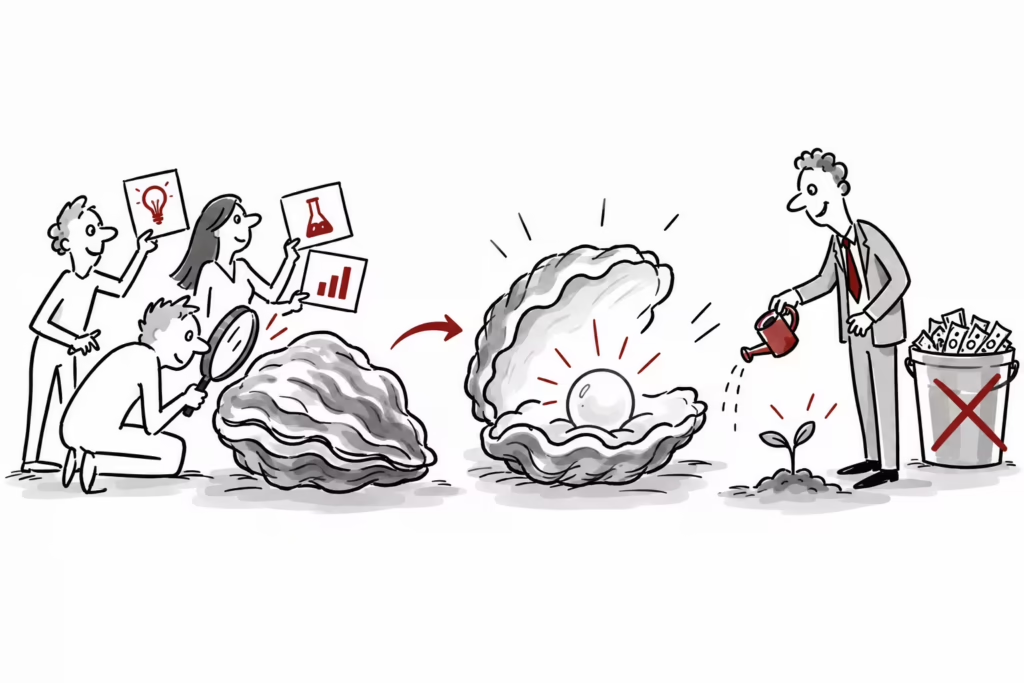
Focused experiments reveal whether an Oyster can become a Pearl before the organization commits the full investment.
Bias: Assuming a Pearl Needs No Further Scrutiny
The problem
A project that appears both high-impact and relatively easy can acquire an aura of inevitability. Executives may stop questioning the assumptions behind it.
But an apparent Pearl may reflect overconfidence, inconsistent estimates, or an unusually persuasive project champion.
How the Innovation Screen helps
Because all projects are plotted using the same definitions, apparent Pearls can be challenged constructively:
- Is the projected impact supported by credible evidence?
- Is the probability of success defined consistently?
- Have important commercial, technical, or adoption risks been omitted?
- Would independent reviewers place the project in the same position?
The screen makes a strong opportunity easier to recognize, but it should not exempt that opportunity from scrutiny.
Bias: Blindly Following the Business Process
The Problem
Big Opportunities (Pearls and Oysters) are so significant to the company that they may require revising or updating business processes intended for more mundane projects. Yet these projects get trapped in a morass of rules that are being too intensively applied.
The result is killing or overburdening the best opportunities with the greatest potential to revitalize the company. Too many companies manage opportunities with home-run potential as safe base hits; they miss out on the breakthrough growth that is in their grasp.
How the Innovation Screen helps
Because Big projects are defined objectively relative to what makes a material difference to the organization, they deserve executive attention individually. These projects therefore have visibility and access to executives who can judge whether a rule or other obstacle is creating an unnecessary barrier. If appropriate, they can create exceptions or otherwise escalate and help solve problems.
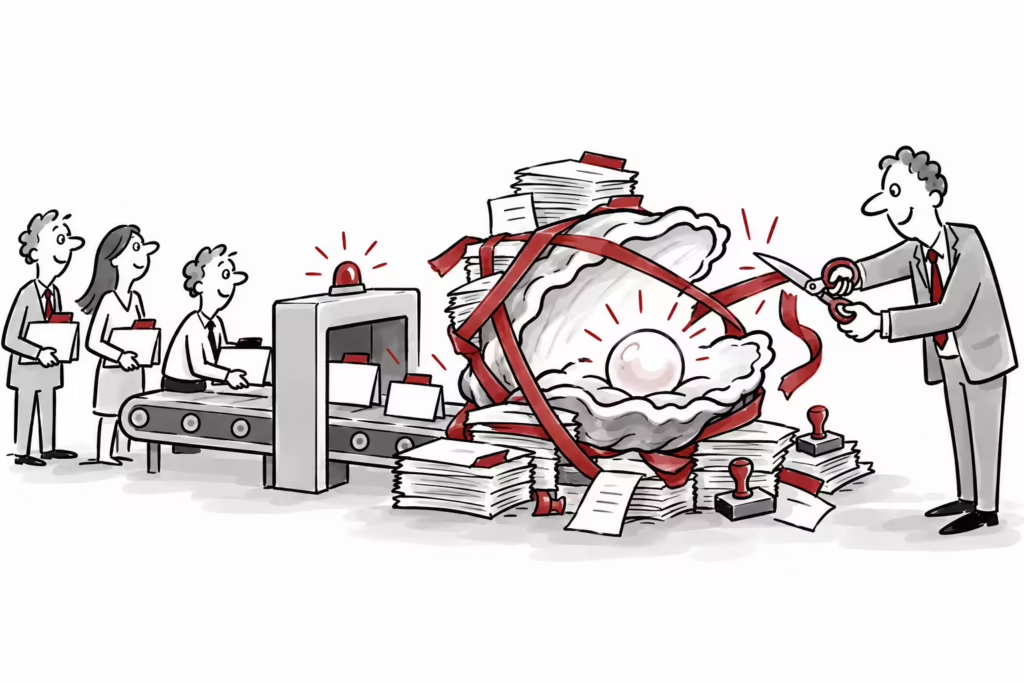
Big opportunities sometimes require executive judgment to remove process barriers designed for more routine projects.
Because Pearls are Easy, they can be managed traditionally, solving problems that prevent effective delivery. Oysters are Hard, so they are more likely to need help in derisking. A couple of common examples: Maybe an executive phone call to a potential partner organization can resolve a critical question. Maybe they need special permission to run a small scale trial that violates established brand guidelines. Maybe a critical internal resource won’t make time to conduct a test and needs to be reminded that the test has outside value.
How to Use an Innovation Screen
A practical screening conversation can follow five steps:
- Set the frame. Define the business unit, strategic objectives, growth expectations, and time horizon the portfolio is intended to serve.
- Define significant impact. Establish a consistent financial or growth threshold that distinguishes projects capable of making a meaningful contribution to the organization’s objectives.
- Define probability of success consistently. Agree on which factors it includes, such as development, launch, and initial market acceptance.
- Evaluate each project against a broad metric and comparable figure of merit. Typically, Net Present Value, although Contribution Margin or Revenue can work. Incorporate uncertainty directly into the evaluation: Don’t argue assumptions in the business cases, but rather understand how different assumptions lead to different business cases.
- Plot the active portfolio. Include any sufficiently developed opportunities that can be evaluated using the same definitions and evidence standards.
- Discuss the mix and take action. Identify clutter, White Elephants, under-supported Oysters, and credible Pearls. Anchor the tool in executive routines by conducting this screening quarterly and during annual strategic planning reviews.
The most valuable output is not the diagram itself. It is the portfolio conversation the diagram makes possible.
From Project Advocacy to Portfolio Choice
Cognitive bias cannot be removed by telling executives to be more objective. Bias is reduced by changing the structure of the decision.
The Innovation Screen creates a common frame for comparing unlike opportunities. It exposes portfolio clutter, makes weak projects harder to defend through advocacy alone, and protects high-potential opportunities from being rejected merely because they remain uncertain.
Most importantly, it moves the executive discussion beyond approving or rejecting isolated projects. Leaders can instead decide what combination of dependable returns, calculated risks, and meaningful upside gives the portfolio the power to achieve its growth goals.
Next Step
Is your innovation portfolio positioned to deliver the growth expected of it or simply filled with individually defensible projects?
Reach out to Doug Williams to discuss how the Innovation Screen and SmartOrg’s portfolio decision methods can reveal your current project mix, focus investment, and identify opportunities to increase portfolio power.