
The session engaged innovation and R&D leaders representing companies across consumer goods, energy, and technology in a hands-on exploration of how organizations can better navigate the Incubation phase of innovation.
This middle phase—between ideation and scaling—demands a delicate balance of driving upside, reducing downside, and building confidence in the business case to encourage further funding. Through stories, exercises, and spirited discussions, participants discovered practical ways to de-risk innovation without stifling its potential.
Setting the Stage: The Challenge of Incubation
The session began with context from SmartOrg’s work helping companies make better decisions under uncertainty. Using data from a pre-conference survey, Doug illustrated the widespread gap between the importance organizations place on incubation and how effective or efficient they actually are at managing it.
“Three out of four companies say incubation is critical, but almost none feel they do it very well.”

- Difficulty connecting customer needs with internal technology and cost constraints.
- “Zombie projects” that never die.
- Shifting goals and unclear problem definitions.
- Poor communication between R&D and customer-facing teams.
- Struggling to innovate within mature markets.
This set the tone: nearly everyone faces similar struggles in transforming early ideas into scalable business opportunities.
The Rogers Story: When Finance Meets Innovation
David shared a case study from Rogers Corporation, a materials company developing high-frequency circuit boards for military communication vehicles. Despite strong alignment with corporate strategy, technical success, and customer pilots with the Army Rangers, the project hit a wall—Finance deemed it the worst in the portfolio.
The issue wasn’t technical. It was a business design gap: the team had overlooked the long sales cycle and complex procurement chain.
“Innovation doesn’t fail because of bad technology—it fails because of bad assumptions.”
The story illustrated how finance and innovation often speak different languages. Finance assumes “reasonable” assumptions, while innovation thrives by testing unreasonable ones. By reframing the problem (“How can we shorten the sales cycle?”) and involving vehicle manufacturers early, the Rogers team transformed a doomed project into a breakthrough success.
Prioritizing What to Learn
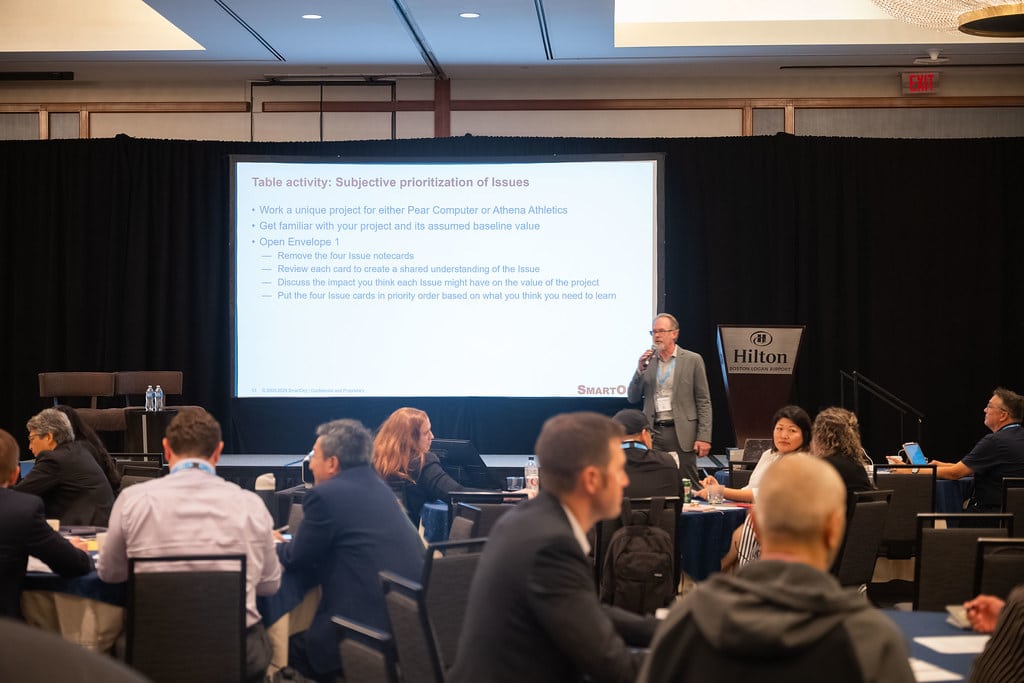
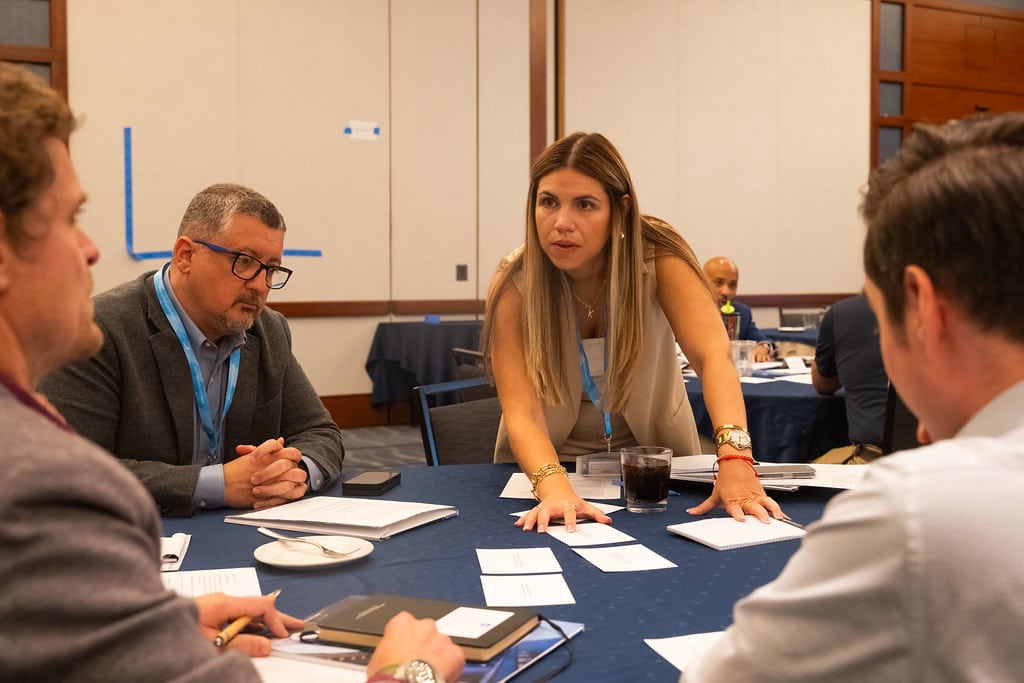
Participants worked in table teams on projects for fictional companies—Athena Athletics and Pear Computer—each facing multiple uncertainties. Teams were given limited information about their project and asked to prioritize which issues to learn about first, such as customer acceptance, technical feasibility, or regulatory barriers.
The exercise revealed the messy reality of early-stage innovation:
- Some teams utilized frameworks to categorize issues by feasibility, desirability, and viability.
- Others relied on intuition, debate, or the person with the most convincing argument.
- Many realized how quickly assumptions shape decisions—and how uncertain they felt about their rankings.
Doug and David noted that this uncertainty mirrors real incubation work: decisions must often be made with incomplete, subjective information. Structure, communication, and (ultimately) alignment is what allows teams to identify and overcome blind spots.

From Projects to Portfolios: Seeing the Big Picture
With colored cards representing project issues and swing values, participants physically built a De-Risk Dashboard on the walls for Athena and Pear. Each project’s swing (uncertainty) and baseline (value) were plotted to visualize relative opportunity and risk across the portfolio.
This visual sparked lively debate about:
- When to invest in learning versus scaling.
- How to balance large swings (high upside, high risk) with smaller, steady bets.
- How cross-functional communication and trust influence decision-making.
- The difference between prioritizing projects and learning across a portfolio.
Key Takeaways
The facilitators and participants synthesized the workshop’s main lessons:
- Scan broadly to avoid blind spots. Don’t let comfort or familiarity dictate priorities.
- Articulate both upside and downside. Assumptions drive uncertainty—make them explicit.
- Quantify what you can. Swing values clarify which uncertainties deserve learning investment.
- Use business cases as learning tools, not scorecards. Prototype the business model early.
- Prioritize learning, not projects. In a portfolio, knowledge gained de-risks everything else.
- Engage cross-functional allies early. The Rogers story underscored the power of executive and ecosystem connections in accelerating adoption.
- Challenge “reasonable assumptions.” True innovation lives in testing what seems unreasonable.
Watch the full workshop and download the slides for key insights on de-risking innovation: