Profitable Pivots for Your Portfolio Part 2
By David Matheson  4 min read


By David Matheson
4 min read
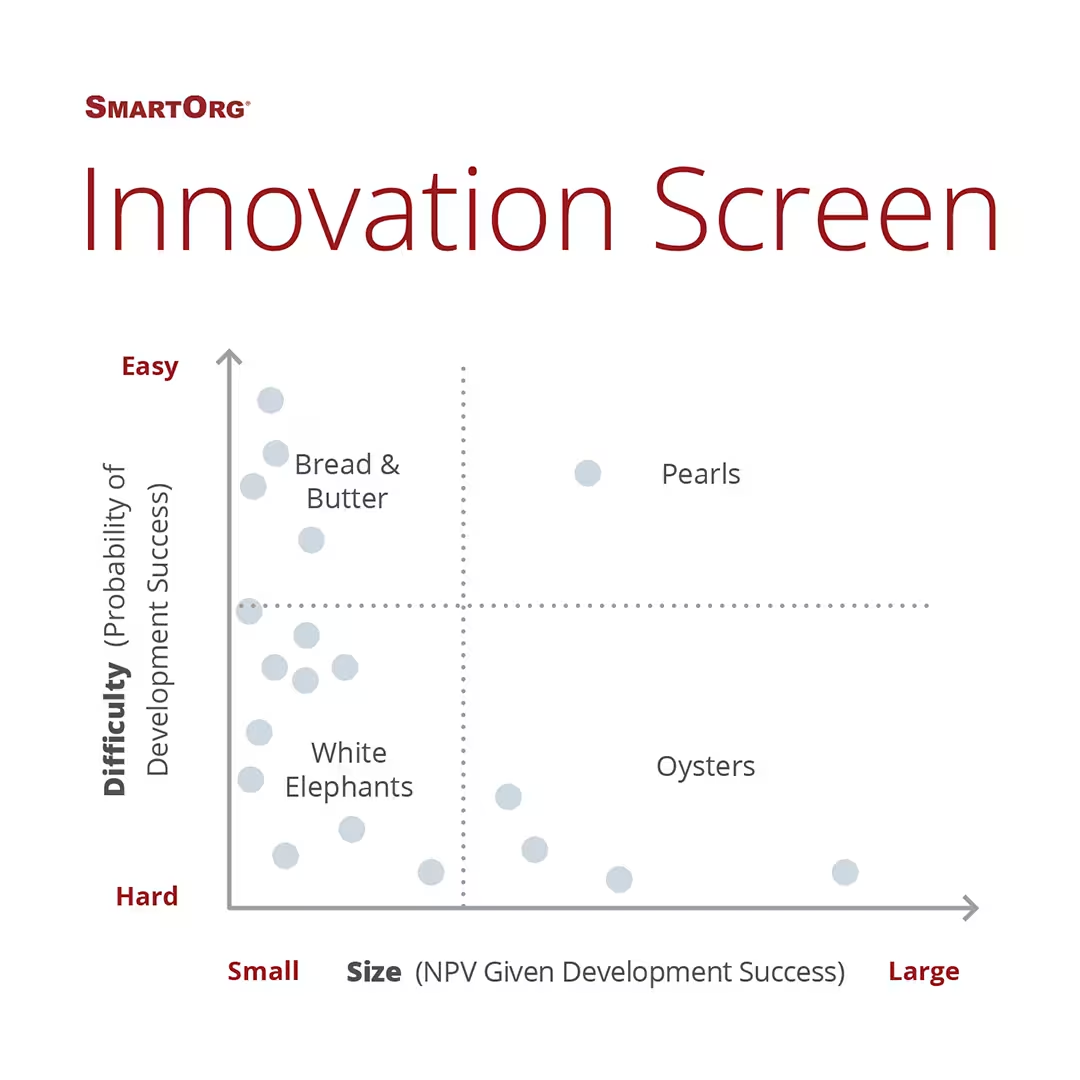
The Innovation Screen maps the relative impact of projects against their relative difficulty. The Innovation Screen divides your innovation portfolio into four types of projects: Bread and Butter, White Elephants, Oysters and Pearls.
A very interesting insight from the Innovation Screen is that the mix of project types—that is, how many projects fall in each quadrant relative to the total—gives you an estimate of the overall power of your innovation portfolio to drive growth. White Elephant projects drag down the aggregate portfolio power, and Oysters and Pearls boost it.
Often teams only work on things in their comfort zone or design projects around showing accomplishments. Move beyond execution plans: use learning plans to humbly pursue really big ideas.
The learning plan lays out the proof points in the sequence in which you will investigate them. The order is important: starting with the hardest proof points helps you avoid going down the path of confirmation when a showstopper is lying in wait for you.
Each proof point leads to a go / no-go decision. If a proof point fails, there is no sense in continuing with the learning plan as originally laid out. That’s the time to re-examine the vision and determine whether there’s a viable alternative vision to pivot to. If not, it’s time to cut your losses and redirect your resources and focus on another opportunity.
SmartOrg presented “Proof Points: Profitable Pivots for Your Portfolio” at the 2016 Frost & Sullivan MindXchange New Product Innovation and Development Conference in La Jolla, California. Assisted by thought leaders Bernard Janse (Buckman International), James Gross (Johnson Controls) and Udi Chatow (recently of HP), we showed the attendees four practical ways to seek out and unlock hidden value in an innovation/new product portfolio:
